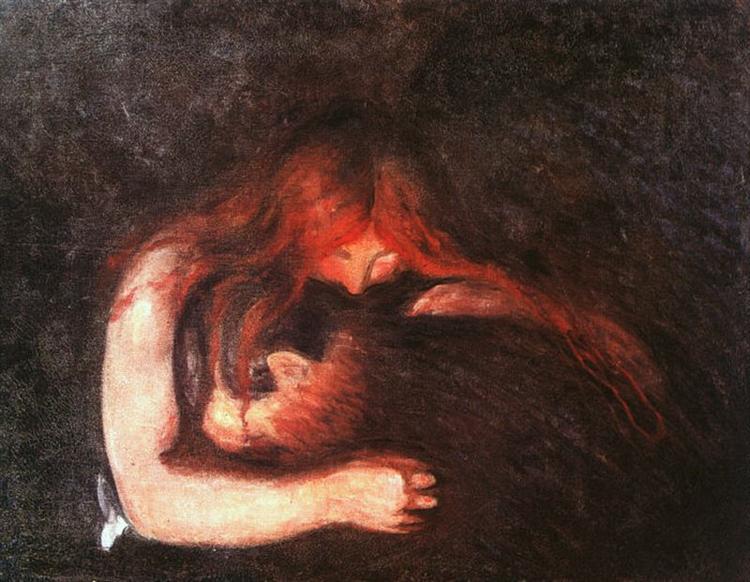
in my humble opinion, i think they want to eat isobel. those 𝒇𝒓𝒆𝒂𝒌𝒔.
other works relating to metaphorical cannibalism, and how it all relates to the play
isobel, a servant with a physical deformity (a hunchback), is often depicted as vulnerable, both physically and socially. In the 1799 timeline, her role as a "body" rather than a fully respected individual can be linked to the theme of cannibalism, where the characters metaphorically "consume" her by reducing her to a resource or subject for their desires and scientific curiosity.
The play often critiques the ethics of scientific inquiry, and in the case of Isobel, Dr. Armstrong's interest in using her for an anatomical dissection represents a literal reduction of her body to an object for consumption. This mirrors the metaphorical cannibalism—where society consumes individuals who are marginalized by exploiting them for advancement, whether scientific, social, or personal.
Feeding semantic field and food handling: Isobel is frequently associated with food or being spoken to in terms of feeding, connecting to a theme of figurative cannibalism. (susannah comparing her to her childhood who became ‘cutlets’ (A1S1) or her serving wine and polishing the dinner table (which is where her body rests at the end of the play) or when roget uses the word ‘consumption’ (A1S3))
Possession of Isobel: The other characters in the 1799 timeline seem to figuratively "consume" Isobel, stemming from their need to possess her in some way. (fenwick consuming her work time to talk, armstrong wanting to ‘consume’ her in order to satiate his morbid desire to study her deformity, susannah comparing her to judith + using gynocentric misogyny to control her and keep her subordinate (as well as feel better about the fact fenwick pays more attention to isobel, roget wanting to possess her by trying to protect her from armstrong (savior complex????))
Susannah's comparison of Isobel to Judith the lamb: In Act 1, Scene 1, Susannah compares Isobel to her childhood lamb, Judith, who was killed and eaten by her family. This foreshadows Isobel's death at the hands of a "family member" (Armstrong). Susannah does nothing to stop Isobel’s death, reinforcing the idea of Isobel as a sacrificial figure, consumed by those around her. + The parallel between the two figures emphasizes a twisted irony—where the biblical Judith wields agency to protect, Isobel is stripped of hers, becoming the sacrificial lamb. Her death serves as a grim reflection of how power, control, and trust can lead to devastating consequences.
"Last Supper" parallel: The final scene's gathering around the table resembles "The Last Supper," with the characters awaiting their world's change, symbolizing the culmination of betrayal and consumption. (+ armstrong is judas and isobel is the meal they feast upon)
Armstrong as Judas: Armstrong, like Judas, uses love and trust to betray his victim, Isobel - the kiss of judas is a gateway to cannibalism (similar to ‘vampire’ by munch - https://uploads5.wikiart.org/images/edvard-munch/vampire-1895.jpg!Large.jpg)
Carnal desire: upon seeing isobel’s twisted back for the first time, armstrong experienced an erection. this displays an intense form of carnality; within the cultural psyche, cannibalism speaks to the carnal desire for all-consuming passion - a kiss is the beginning of cannibalism.
Armstrong’s betrayal: Armstrong kills Isobel out of scientific curiosity, drawing a parallel to betrayal and consumption. this also makes us ponder on the ethics of scientific experimentation - science and ethics
Roget’s use of "consumption": In Act 1, Scene 3, Roget refers to tuberculosis as "consumption," reflecting a subconscious desire to possess Isobel by protecting her. He chooses this word over "tuberculosis" or the colloquialisms "white death" or "white plague," which suggests a deeper connection to the theme of consumption.